The Seeds We Choose to Sow
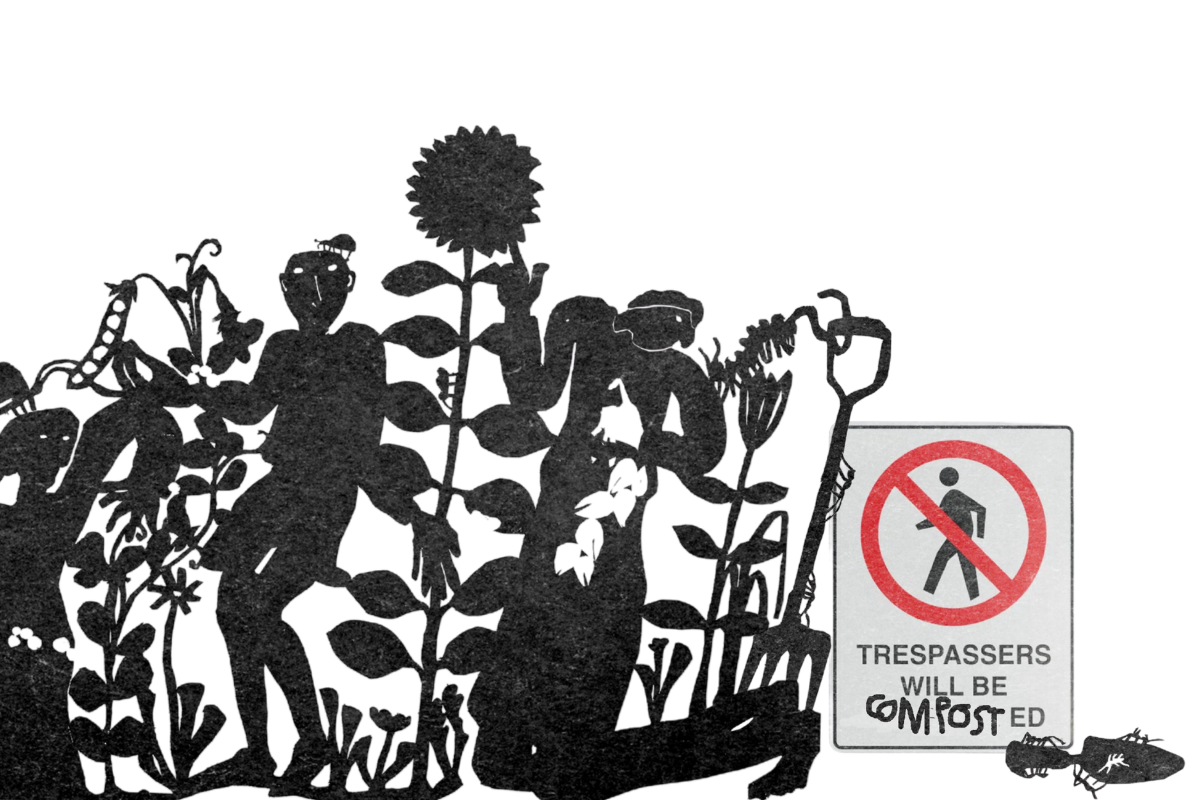
I wrote the following piece last weekend. Since then, the simmering embers of anti-immigrant violence have burst back into flame. For Black, brown, and migrant communities these flames are not a metaphor but a life-threatening reality. Homes and workplaces are being torched and families hide in their homes in terror. Far-right figures are fanning the flames and basking in the heat.
Despite the spread of far-right fuelled fires, both literal and metaphorical, most of us are not in the position of firefighters. For most of us, if the fires have started then we are too late. Because the fuel for these fires is laid long before they are lit. Some feedback I received for the following piece was that it seemed a bit extreme of a leap to make between popular gardening rhetoric and fascism. But that is precisely the point. It is the quiet and seemingly benign words and actions that, without tending to, become fuel for far-right and fascist fires to spread.
In reality, most of us won't ever come face-to-face with Farage, or Rupert Lowe, or Tommy Robinson. If we did, we'd be unlikely to affect their ideological standing. Nor are any of us likely to control the flames by shouting anti-fascist sentiments at far-right demonstrators, most of whom don't identify themselves as far-right, let alone fascist. Protests against the far-right have their place, if anything to demonstrate to marginalised communities that contrary to popular rhetoric, they are welcome here and we will stand by them; an island of strangers we are not. But protests probably aren't going to change any Tommy Robinson supporters minds.
What will affect the flames are those quiet words and actions we choose take together in our communities. The uncertain and volatile times we are in are fertile soils for the seeds we choose to sow and tend to, be they seeds of isolation, scarcity and fear, or seeds of community, abundance and trust. For the majority of us, that is where our greatest power lies.
As always if you have thoughts, feedback, or suggestions please share them in the comments below or email me at therosaartist@gmail.com.
An Englishman's Vegetable Bed is His Castle
A popular gardening YouTuber published a video last week about how you can cultivate self sufficiency and food security simply by growing as much food as possible, as cheaply as possible, in 6 small raised beds. Of course, in an unrelenting cost of living crisis with food prices soaring and the inherent insecurity of our centralised food system making itself stark, it is logical to grow as much of your own food as possible. Between 2020 and 2025 Tesco’s profits increased by 72%, to £3.1bn (source). That alone should make you want to grow your own carrots and eat them.
Just please don’t call it self-sufficiency. Or food security. If we are not precise about the words we use, we leave fertile ground for far right ideologies and fascism to take root.
Here are some titles of recent videos on popular YouTube gardening channels:
More food, more security | Real life gardening in the veg garden
Self-Sufficiency Starts With These 9 High-Yielding Crops
10 Easy Survival Crops (Don’t Starve!)
The aforementioned gardener went to several local garden centres, inspecting the vegetable plug plants (seedlings available to buy in small pots for transplanting into your garden, rather than raising them from seed yourself), declaring them either worth or not worth their price tag and pointing out it was cheaper to grow your own from seed. You could buy a packet of 500 seeds for 99p; 500 carrots for less than a quid. Except he did buy a 6-pack of runner bean seedlings because they looked ‘decent’. After all, runner beans are a good ‘survival crop’ for ‘self-sufficiency’.
Maybe it is my autistic tendency to swallow things literally but by virtue of being alive we cannot and never will be self-sufficient. What of the trillions of microbes living inside and on us? We are not one ‘I’ but multitudes on legs. We aren’t even self-sufficient in death. Hooray for earthworms and carrion beetles.
I firmly believe everyone should have the opportunity to grow their own food, should they wish to. We know that soil releases chemicals that stimulate serotonin in our brain. Sowing seeds and tending to them alongside the multitudes of other creatures in this wild and messy web of life is a birthright and a lifeline. For many it is a way to connect to their culture and roots following displacement and upheaval. For some, it has become an act of resistance in the face of neocolonial extraction. For others, it is a healing balm. For the 8 year old I was working with a few weeks back, it was a chance to escape the straitjacket of the classroom and happily rootle around with woodlice.
If, due to your financial circumstances, the only way you could have a chance to grow your own is by buying the cheapest seeds and seedlings available, please do it. Growing a garden, however small your shoestring, is a beautiful and radical act.
But if you are a YouTuber reaping profits from views and sales by promising your viewers food security and self sufficiency, I would like to gently compost you because you should know better.
The irony here is that both the seeds and the plug plants will without doubt have been grown using chemical inputs such as synthetic fertilisers and pesticides. Many of them will have been grown by migrant workers in inhumane conditions and shipped in from overseas, part of a global seed market owned by a handful of corporations. The most recent panic regarding food shortages in the minority world followed the blockade of the Strait of Hormuz, a relatively miniscule body of water. “30% of the world’s ammonia, one of the key ingredients in artificial fertiliser, passes through the Strait of Hormuz. The price of urea, a form of ammonia, has more than doubled since the war on Iran began. Around 20% of the world’s liquid natural gas (LNG) also passes through the Strait. The same natural gas that is used to produce fertilisers is also used to heat greenhouses for crop production.” (source)
Those seeds and plug plants enabling you to ‘feed your family’, are a product of the very same system that threatens your ‘food security’ in the first place. The master’s tools will never dismantle the master’s house. (source)
Having the resources, knowledge, and time to seek out organic, open-pollinated, and responsibly sourced seed is a privilege. Having the resources, knowledge, and time to grow this seed yourself is also a privilege. It shouldn't be, but it is. Just like access to organic, fresh and local food shouldn’t be a privilege, but it is.
What is the actual definition of ‘food security’? Like many words, it is often bent and moulded to fit the motives of the social body using it.
According to the UN, food security “exists when people have access to enough safe and nutritious food for normal growth and development, and an active and healthy life.”
This sounds reasonable.
However, unlike food sovereignty, food security can be achieved by any means necessary, including through ecologically destructive, human-rights violating, and profit-gobbling means.
Food security for my family/community/country, regardless of how it affects yours. This is where self-sufficiency comes in.
If your focus is on self-sufficiency - that is, being able to fend for yourself and your kin as independently as possible and without relying on anyone else - you have conveniently defined the world as being made up of tidily disparate, autonomous individuals. Note that this can be at multiple scales, whether family, community, or nation state.
If, as dear old Maggie said, there is no such thing as society, only individuals and families, then any consequences ‘they’ might face as a result of food security for ‘us’ don’t really matter. The means might be immoral and ethically reprehensible. They might even amount to crimes against humanity. But in the long term, we are securing our’s and our children' s future. Any lives and ecosystems destroyed in the process are just unfortunate but unavoidable consequences.
This is the deep fallacy at the heart of self-sufficiency. That ‘we’ are separate from ‘them’, and that what happens ‘over there', to ‘them’, won’t affect ‘us’, because we are a distinct and autonomous entity. That a living being can be separated from and have dominion over its ecosystem, with no ill effects. Smells like fascism to me.
OK, rosa, but this is just a few youtubers, a few people wanting to not have to rely on Tesco. You hate Tesco anyway (Whose idea was it to play music on loudspeaker in a supermarket as if generating profits while millions rely on foodbanks wasn’t enough salt in the wound?).
Why are you suddenly equating a benign inclination to grow carrots with fascism?
Well, you remember those microbes? They are very very small. But without them you and I would not exist. Neither would carrots. Or much else. The very architecture of our cells was built by microbial symbiosis. Small things matter because they shape our world in impossibly powerful ways for generations to come.
To paraphrase Elia J. Ayoub writing in a different, but albeit interconnected, context; beware of small things. Throwing words like self-sufficiency and food security around might seem small and insignificant. But, as our YouTuber demonstrated nicely for us, without first critically composting these words carefully and radically, we, at best, easily end up reinforcing the very systems that necessitate the instability and collapse we are all trying to weather. At worst, we provide generous fertiliser for the governing ideology of the far right, which as Naomi Klein and Astra Taylor write, “in our age of escalating disasters has become a monstrous, supremacist survivalism”.
If we promise people the myth of self-sufficiency, we are implying the promise that their wellbeing can be disentangled from the wellbeing of the whole. If we are promising people food security through self-sufficiency, whether on a national or a household scale, we are implying that the best chance we have of surviving the future is by calcifying our borders, adopting a bunker mentality, and saving ourselves while and if we can.
It is no coincidence that one of the core doctrines of Nazism was "Blood and Soil" (Blut und Boden); a doctrine that linked the health of the Aryan race with the health of the soil beneath its feet. It is no coincidence that Mussolini’s “Battle for Grain” focused on making Italy self-sufficient and independent of foreign imports. It is no coincidence that the founders of the organics movement in the UK were either fascists or closely tied to fascists like Oswald Mosley, believing that healthy soil was key to nurturing the supremacy of the English. It is an increasingly small jump from benign “grow-your-own” tutorials to homesteader influencers dominated by white supremacist Christian nationalists.
People have every right to want to be able to feed themselves and their communities without relying on a food system that extracts, exploits, and destroys people and planet alike whilst lining the pockets of multibillion dollar corporations. It is a deeply profound instinct to want to survive; to want to feed and care for ourselves and our communities. I do not believe that any of those YouTubers are fascists; they may even be actively cultivating the opposite in their local communities. But if we are not precise about the words we use, we leave fertile ground for far right ideologies such as fascism to take root.
The drive for self-sufficiency born from a fear of interdependency. Under end-times neoliberalism, dependency is seen as a weakness. The UK imports 40% of its food! How vulnerable we are! But it is not our interdependency on others that makes us, or anyone else, vulnerable. It is a food system and economic system that treats the soil, the planet, and the global majority as an infinite resource to be extracted and exploited for the short term profit of a minority. That is a system doomed to collapse. No wonder the cost of profit crisis has left so many feeling vulnerable and isolated. And feeling vulnerable and isolated begets fascism. History has taught us as much.
I don’t want a planet of self-sufficient individuals. I don’t want food security for the handful of people who can afford it in a handful of countries who can manipulate global markets. I want resilient communities, from the local to the global, messily embedded in their intricate and diverse ecosystems. I want more people on the land, with farmers and landworkers visible at the heart of our communities, rural and urban. I want community gardens grown by and for the people in every neighbourhood, woven into a global food system determined by the global majority. I want seed sovereignty and access to land for anyone who wants to grow. I want food sovereignty not food security. I don’t have all the answers. Community gardens and growing is one part of a far wider revolution of our global food system. But, at the very least, let’s feed the algorithms a healthy diet of food sovereignty from the ground up.
Some suggested alternative video titles:
Peas for the People! | Real life liberation in the veg garden
Garden walls must fall | How To Grow A Community Garden on Private Land
10 Easy Survival Crops (Don’t starve! Eat the rich!)
Some Further Reading/Resources:
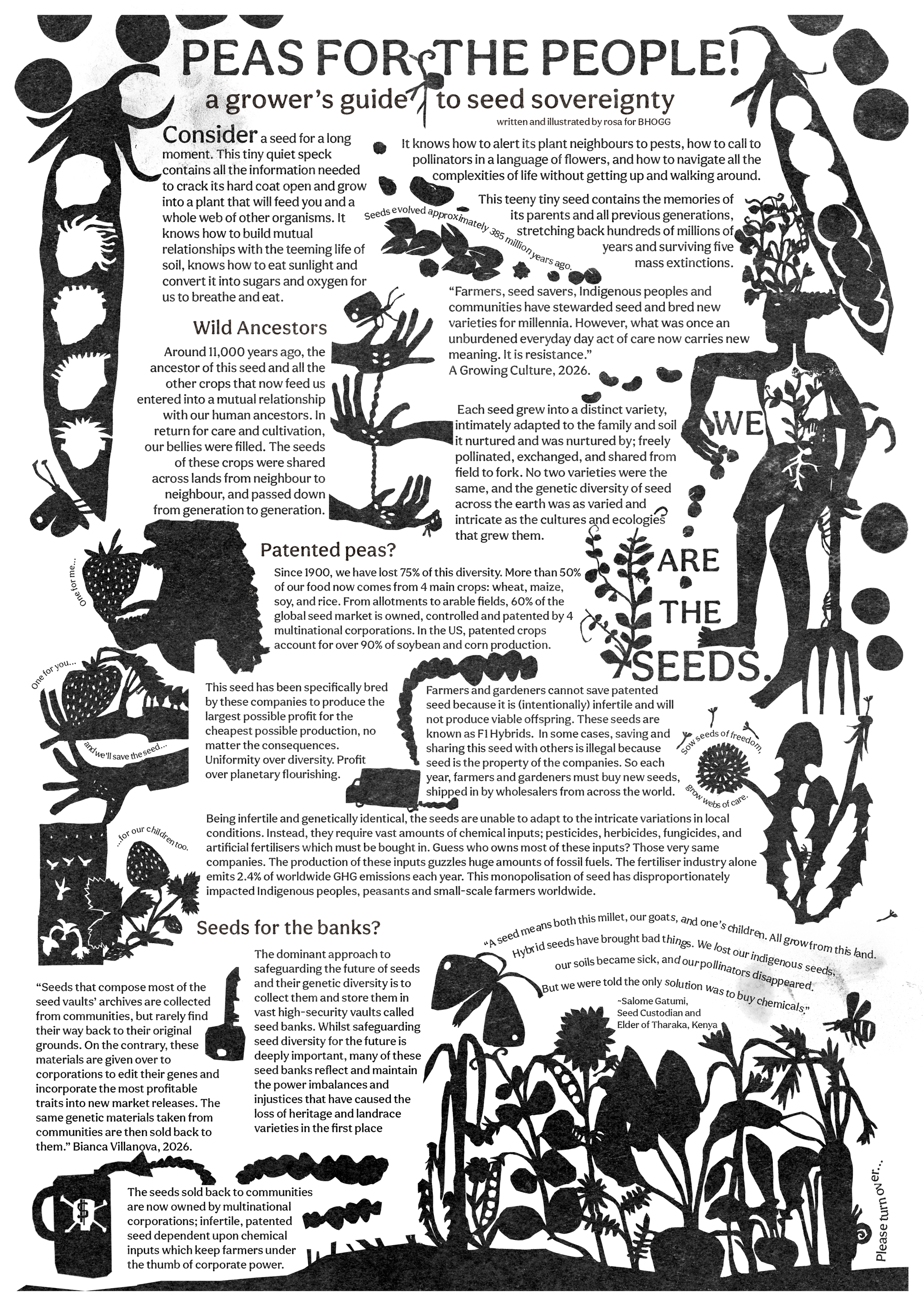
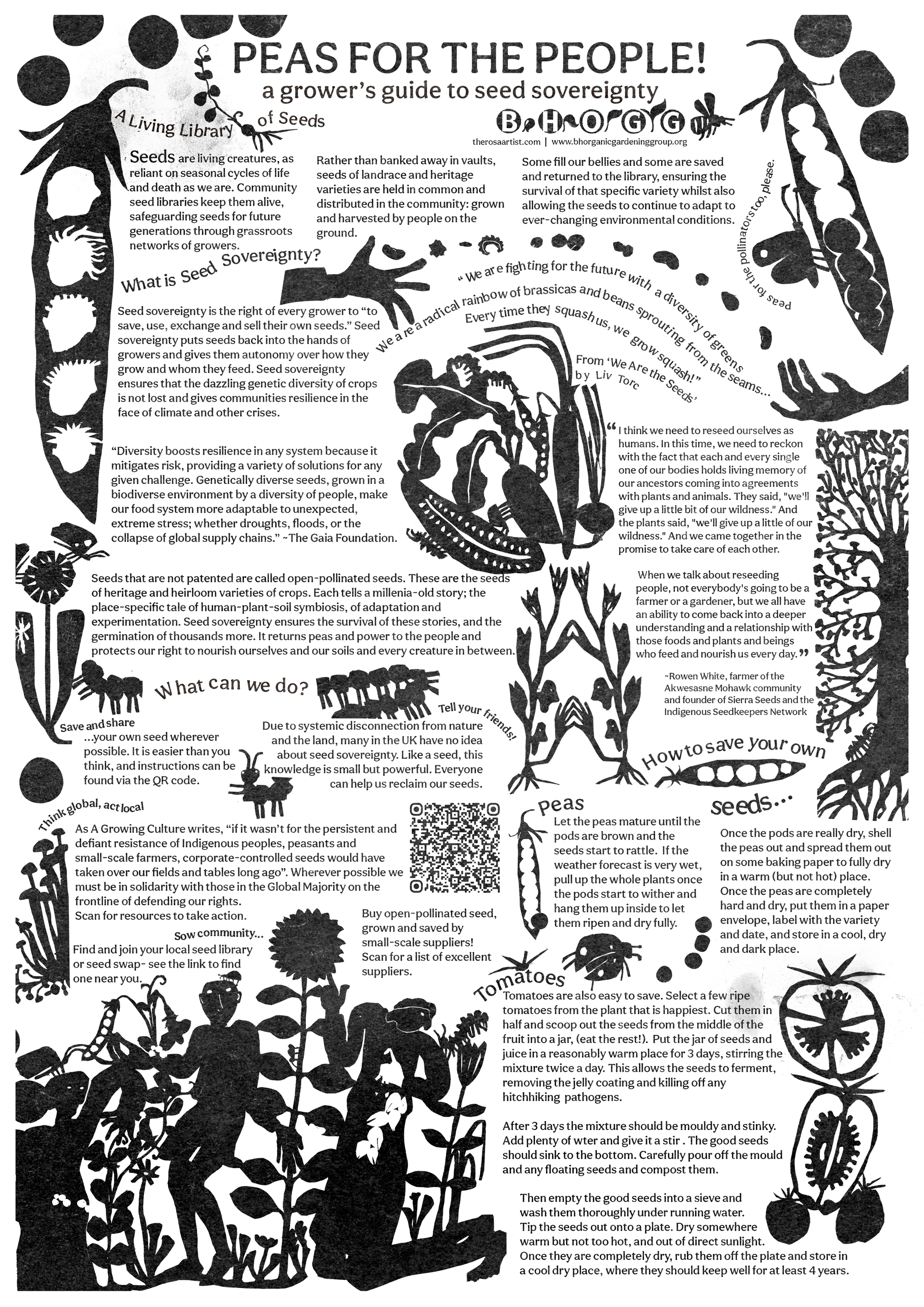
Peas for the People A Grower’s Guide to Seed Sovereignty
Organicism and Fascism in the UK
Right to Grow: Building Civil Food Resilience – Incredible Edible
Organic Farming's Political History - Edge Effects
Find your local community garden: Good to Grow
Stories of Hope and Revolution - YouTube
It's Time to Build Resilient Communities
A History of the World in Seven Cheap Things
Inflamed: Deep Medicine and the Anatomy of Injustice by Raj Patel and Rupa Marya
Below is a poster about seed sovereignty I made for my local community allotment. If you click on the images it is free to download and distribute.
If you've made it this far, I am truly grateful. May the seeds you sow grow and blossom well.